Tribhangi Nratya
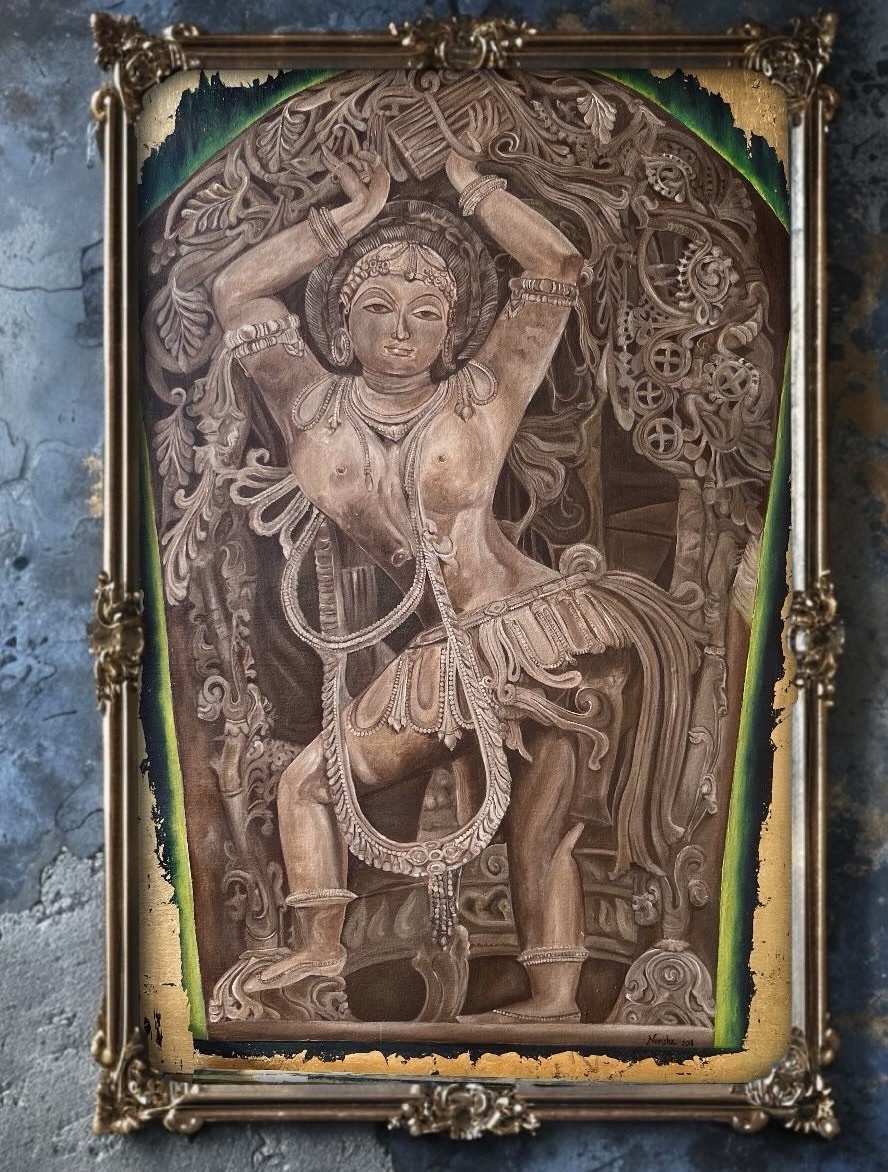
The Hoysala era (1026 CE – 1343 CE) stands as a golden period of artistic and architectural brilliance, centered in present-day Belur, Karnataka.
The Chennakeshava Temple exemplifies this legacy, especially through its exquisite bracket figures—Shilabalikas—graceful male and female dancers carved with remarkable detail.
Among these, the Salabhanjika (or Madanika) emerges as a defining motif. Rooted in earlier Buddhist art, she is a mythical feminine figure often depicted beside a tree, embodying beauty, grace, and artistic expression through dance and music
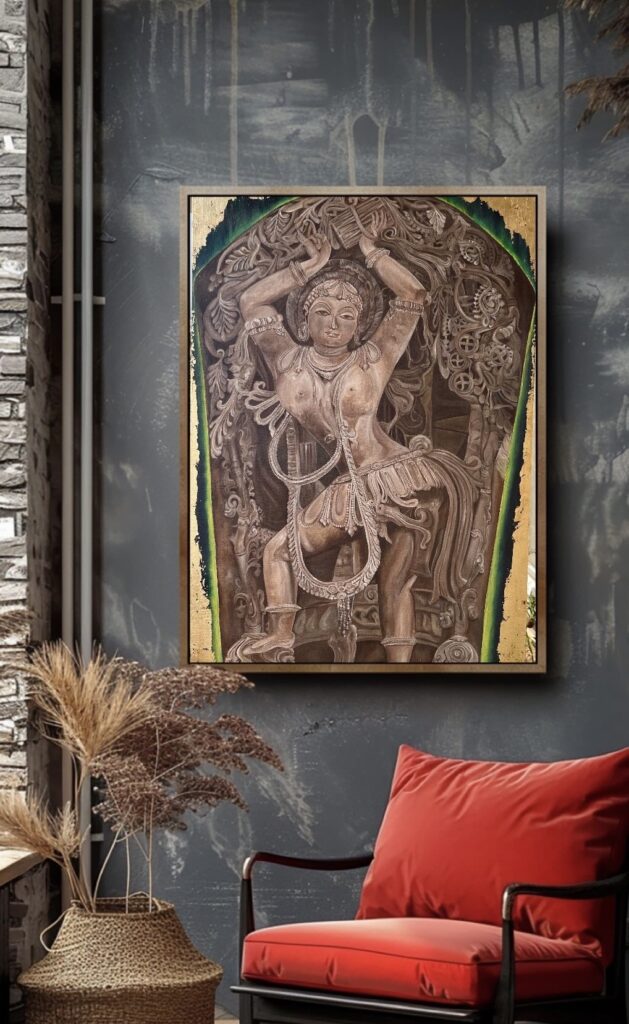
This artwork captures the elegance of Tribhangi Nritya : the three-bend posture,bringing fluidity and life to stone. The original sculpture is carved from soapstone (chloritic schist), known locally as Balapada Kallu.
An ode to timeless craftsmanship, this painting was a journey of rediscovering heritage – layer by layer, moment by moment.
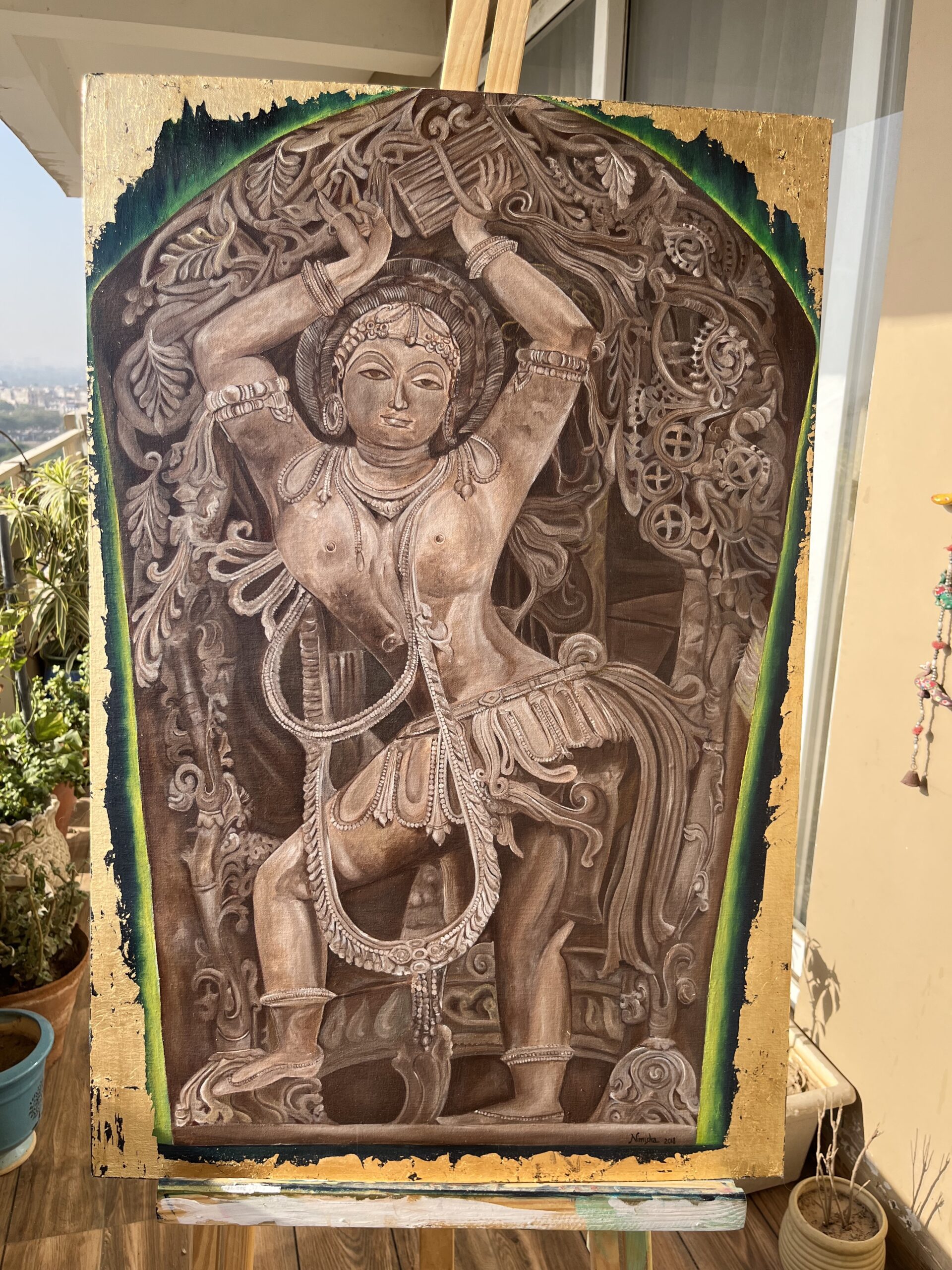
Oil on canvas | 36” x 24”
Related Post

Banaras Ghat
A painting of the ghats of Varanasi is never just a landscape, it is an [...]
Dusk in Thar
There is a timeless rhythm here – the soft shuffle of hooves, the whisper of [...]