Ardhnarishwar — The Divine Balance Within
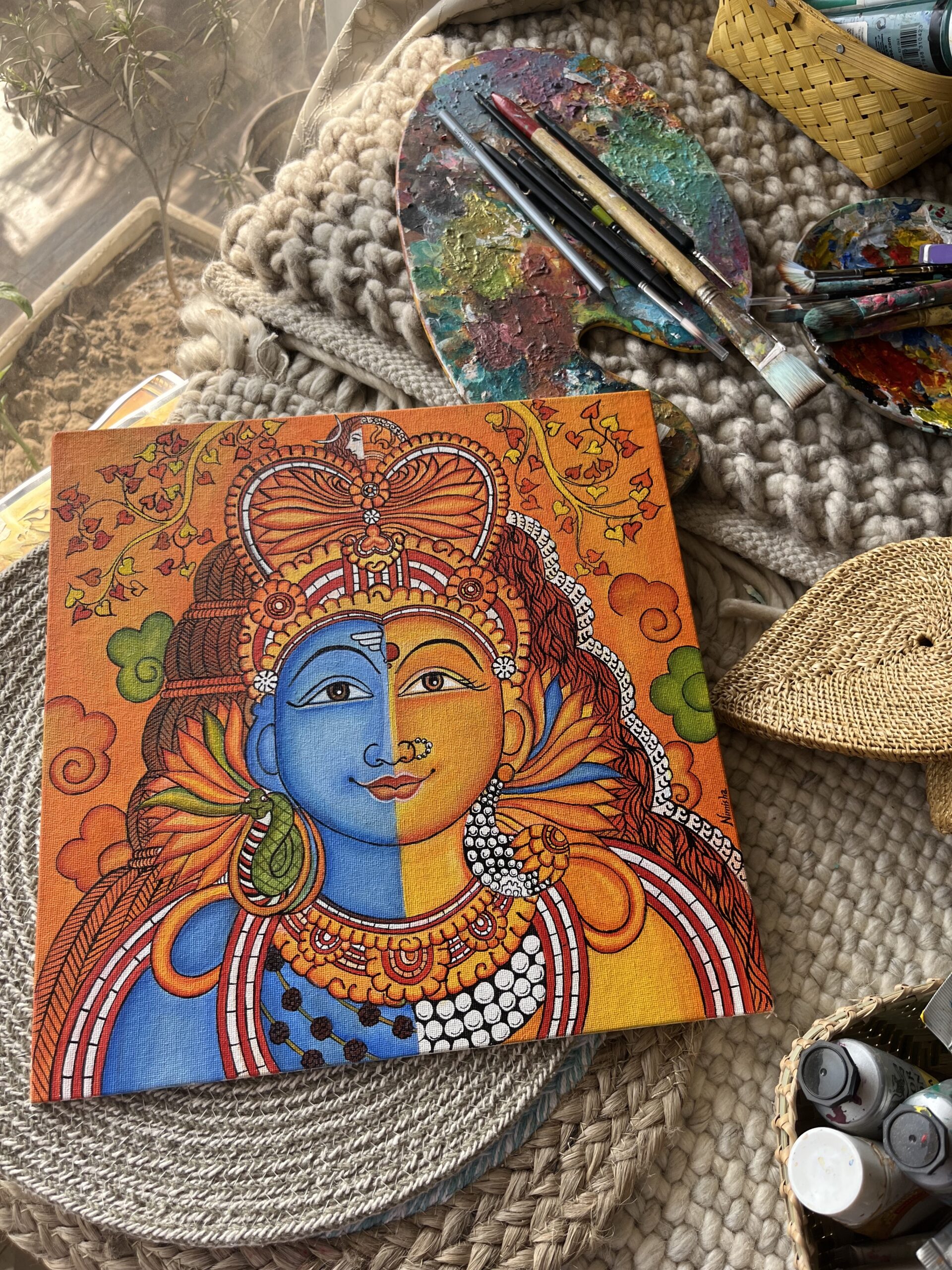
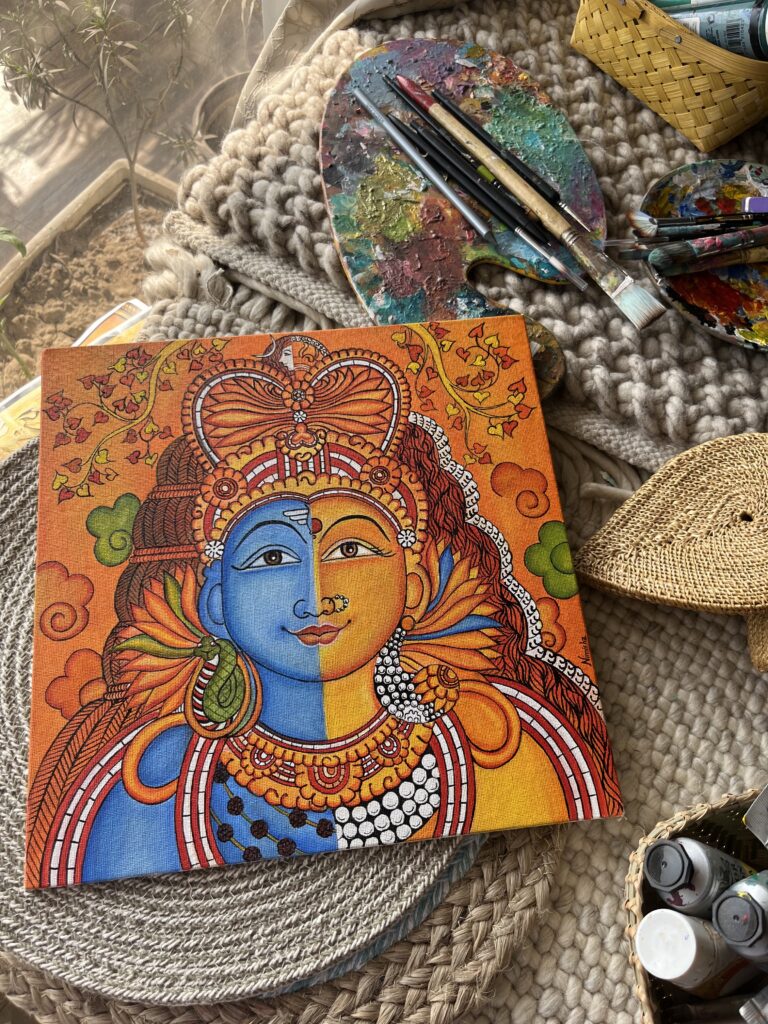
In the vast tapestry of Indian philosophy and art, Ardhnarishwar stands as one of the most profound and visually striking symbols of unity. The form represents the seamless fusion of Shiva and Parvati – the masculine and feminine principles – coexisting in a single, harmonious body. It is not merely a depiction of two deities, but a deeper reflection of the cosmic balance that governs existence.
The right half, associated with Shiva, embodies stillness, logic, and the unchanging consciousness. The left half, representing Parvati (or Shakti), radiates creativity, emotion, and dynamic energy. Together, they form a complete whole – suggesting that neither force is superior, nor can one exist meaningfully without the other. This union is not just divine; it mirrors the balance we seek within ourselves.
Ardhnarishwar transcends gender in a way that feels remarkably relevant even today. It challenges rigid boundaries and invites us to embrace both strength and sensitivity, reason and intuition. In a world that often pushes us to choose one identity over another, this form reminds us that wholeness lies in integration, not division.
In art, Ardhnarishwar has inspired countless interpretations from intricate temple sculptures to modern abstract expressions. Each portrayal captures a delicate equilibrium: the contrast of adornment and austerity, softness and power, movement and stillness. For an artist, it becomes more than a subject,it becomes a meditation on duality and unity.
Ultimately, Ardhnarishwar is a quiet yet powerful reminder: the universe itself thrives on balance. And within each of us exists that same divine fusion waiting to be recognized, accepted, and expressed.
Related Post
Calm Amid The Chaos
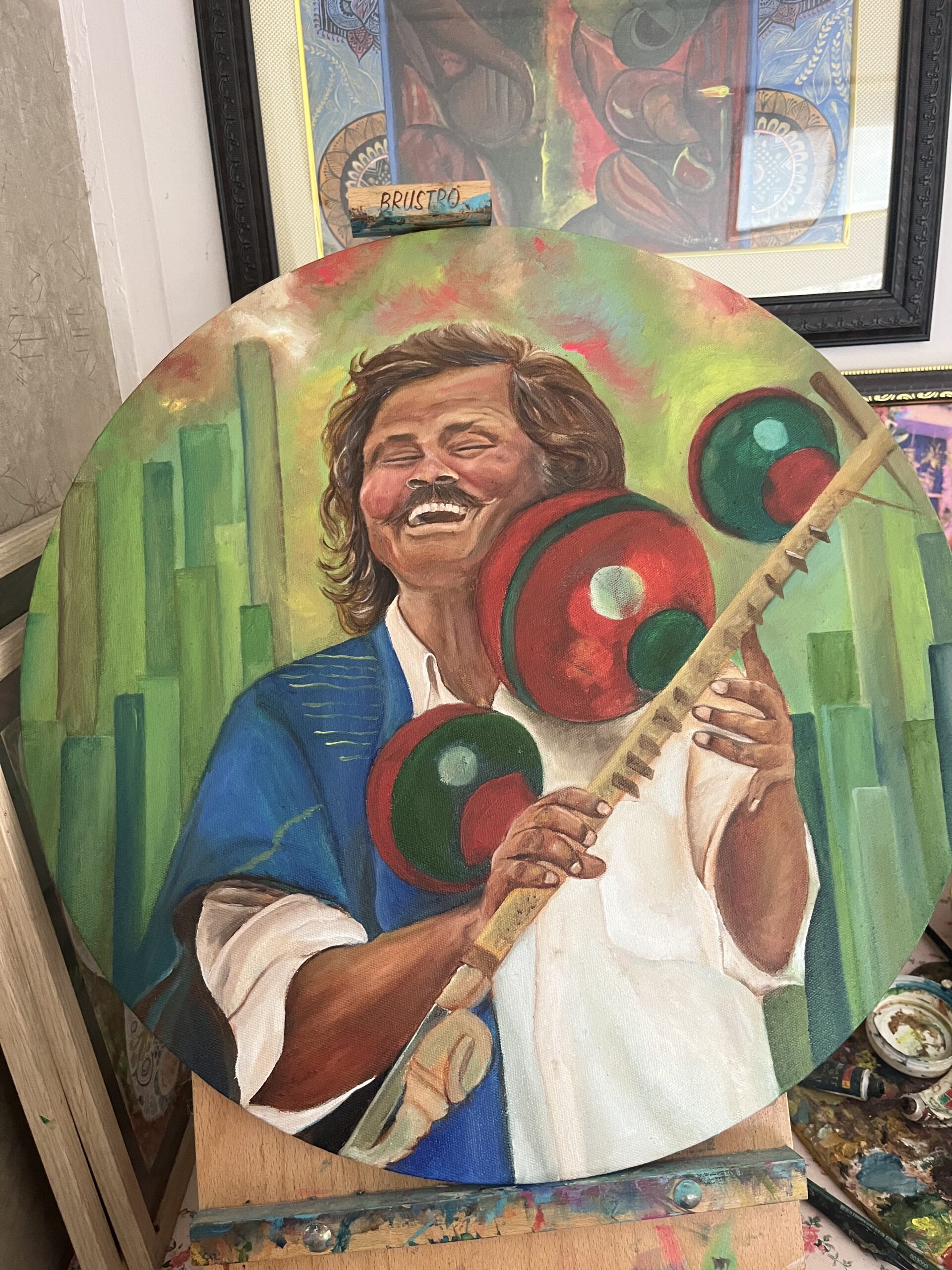
“An Ode to the Artists” The Kinnera, one of the oldest surviving string instruments, traces [...]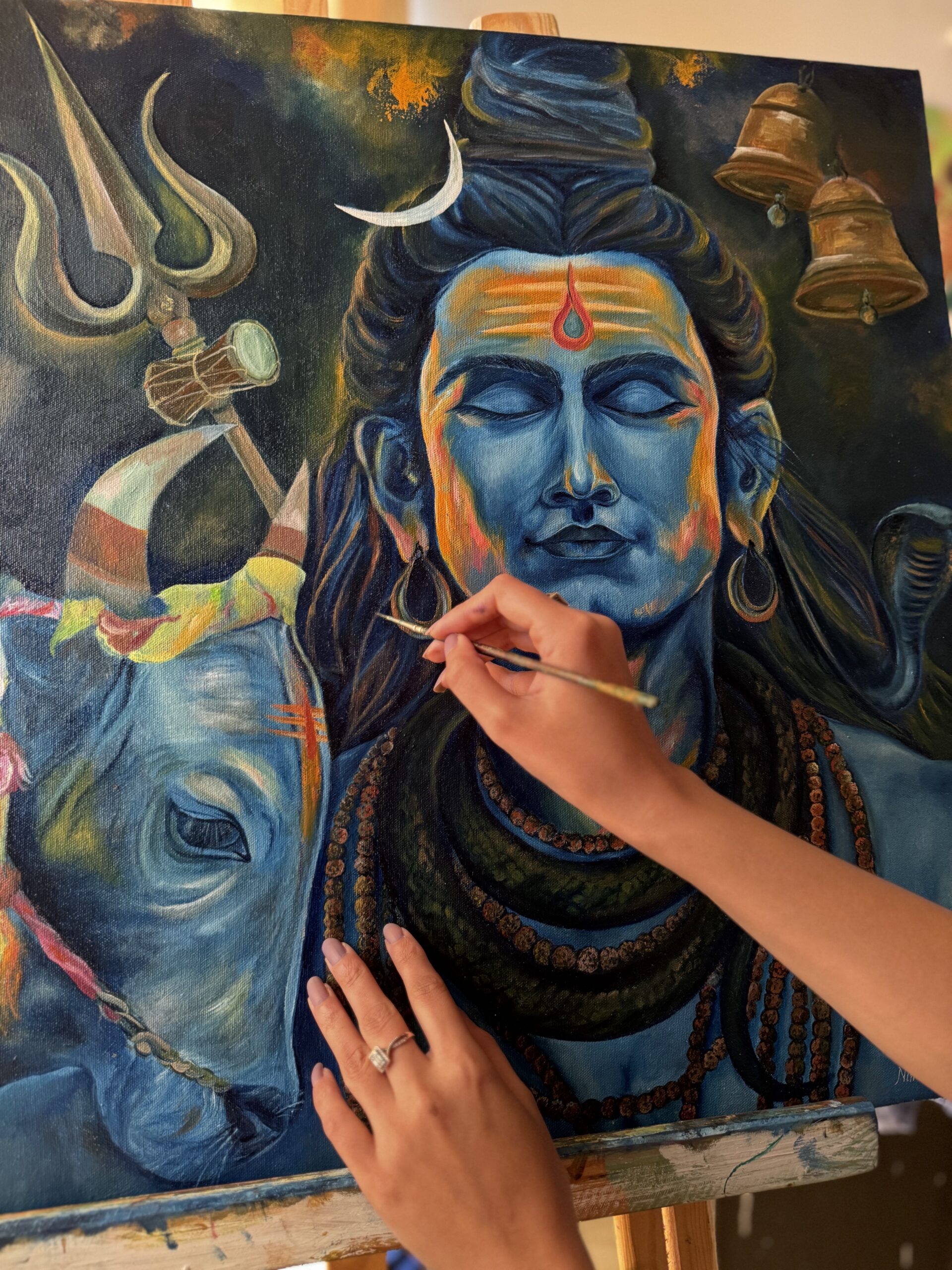
Shiva – The Infinite Within
This has been a long-pending project that I’m excited to finally bring to life—a painting [...]